




Travel Kit
What Is a Home Emergency Medical Kit and Why Should Every Household Consider One?
Most of us don't give the medicine cabinet much thought until someone needs something from it. Then a perfectly ordinary evening can become a search for a working thermometer, a bottle with a readable label, or the phone number for the doctor's after-hours line.
A home emergency medical kit is a way to do some of that thinking ahead of time. It brings together useful health supplies, appropriate medicines, and the information your household needs to use them. It doesn't have to be elaborate. It does have to make sense for the people who live with you.
Think of it as a practical household project, not a prediction that something terrible will happen. You can prepare for an inconvenient sick day without turning your home into a pharmacy.
What is an emergency medical kit for home?
An emergency medical kit for home is an organized collection of first-aid supplies, medicines, basic health tools, and important instructions. It may include familiar nonprescription products, the medicines someone already relies on, and prescriptions provided in advance when a healthcare professional decides they are appropriate.
There is no single standard shopping list that suits every household. Your kit should reflect your family's ages, health needs, and daily routines, as well as the practical challenges you might face during a storm or pharmacy closure.
It also helps to distinguish the terms. A medical kit can include supplies and medicines. A medication kit focuses on medicines. A prescription medication kit is one possible part of a larger home-preparedness plan, not a replacement for every item in it.
Why prepare when everyone feels fine?
Because preparation is easier when nobody needs your attention urgently.
You can compare labels without rushing. You can find the missing dosing syringe, check what you've already bought, and ask your pharmacist a question during normal hours. You can explain the setup to your partner rather than sending instructions from another room while caring for someone.
There are everyday benefits, too. You may discover that you have three nearly empty boxes of bandages but no usable thermometer. Or that the medication list you gave a relative last year no longer matches what they take. These are small problems to solve on an ordinary afternoon and frustrating ones to discover at the wrong moment.
The CDC's home-preparedness guidance includes personal medicines, medical devices, first-aid supplies, and other individual health needs. It is a useful reminder that preparing your home means thinking about people, not just buying a bag of equipment.
Start with four useful parts
1. Supplies for minor injuries and simple checks
Bandages, gauze, medical tape, nonlatex gloves, and a digital thermometer are a sensible starting point. Add the first-aid items your household actually uses and keep their instructions nearby.
A thermometer is only helpful if you can find it and know how it works. Check its battery and store any required covers with it. The same idea applies to other tools: a small, familiar collection is often easier to use than an impressive-looking kit full of unfamiliar items.
First-aid kits vary. Some already include medicines, so check the contents before buying duplicates. The American Red Cross's first-aid guidance can help you review what you already own.
2. Familiar medicines that suit your household
Think about common needs such as pain or fever, usual allergy symptoms, or occasional stomach upset. The right product depends on who will use it. A medicine that is appropriate for one adult may be unsuitable for another person, and children's products require their own attention.
Keep products in their labeled packaging. Read the active ingredient as well as the brand name; two different boxes may contain the same medicine. The FDA's Drug Facts guide explains where to find uses, warnings, directions, and storage information.
You don't need a remedy for every possible symptom. Choose a manageable selection that you understand, and ask a pharmacist about anything unfamiliar or potentially conflicting with your usual medicines.
3. Your regular prescriptions and any advance prescriptions
Begin with prescriptions someone already takes. Know when the next refill is due and how to contact the prescriber or pharmacy. Keep an up-to-date list rather than relying on memory or an old photograph of a bottle.
Advance prescription preparedness is a separate conversation. In some circumstances, a provider may prescribe medicine for a possible future need and explain exactly when to use it. That is different from saving leftovers or borrowing a family member's prescription.
For a Heads Up Medical kit, the online questionnaire and provider review come before the prescription decision. The purpose is to determine what is appropriate for you, not to give every household the same treatment plan.
4. The information that makes the supplies useful
A short paper record can be just as valuable as another product. Include current medicines, allergies, important health conditions, pharmacy details, and the phone numbers you would need for advice.
Keep medicine instructions with the relevant product. For anything stored separately, such as a refrigerated medicine or prescribed rescue treatment, note where it belongs and follow its specific access and storage plan.
Avoid turning this into an enormous binder. The aim is to help someone find the next useful piece of information quickly.
What this looks like in everyday life
Picture a Sunday evening when someone feels feverish. In a prepared household, you can find the thermometer, check any medicine against its directions, and locate the after-hours number. You still need to judge whether medical advice is necessary, but you aren't also searching every drawer.
Or imagine a storm is forecast. You can look at your medication list, check refill timing, and gather the items that need to leave with you if you evacuate. You know which supplies are ready and which questions need an answer before conditions worsen.
A third example is less dramatic: someone else is looking after your children or helping an older relative. Clear labels and current instructions make the handoff easier. They don't need to understand your personal filing system to find a phone number.
These are the kinds of benefits worth planning for: less hunting, fewer forgotten essentials, and a clearer starting point when you need advice or care.
Where Heads Up Medical fits
Heads Up Medical offers home and travel medication kits for people who want to explore prescription preparedness before an unexpected need arises. You complete an online health questionnaire, a licensed provider reviews your information, and approved prescriptions are filled through the pharmacy and delivered to you.
That gives you a way to consider the prescription side of preparation without treating it like another over-the-counter purchase. Approval is not automatic, and the medicines are for the person they are prescribed to.
The household supplies discussed in this article are not a promise of what comes in a Heads Up kit. Review the current medical kit options and contents to see how a kit could fit alongside your existing first-aid supplies and regular medicines.
Make the setup easy to live with
Choose a container that lets you see what you have without emptying it every time. Use simple labels such as "first aid," "thermometer and tools," and each person's name for personal medicines. Keep the original medication labels visible.
Then choose the storage location around the medicines, not around an empty shelf. A cool, dry place away from children's sight and reach is generally better than a steamy bathroom, but individual product instructions come first. MedlinePlus explains common storage mistakes, including heat and moisture exposure.
A zipped bag is not childproof. Keep medicines secured appropriately even when the kit looks tidy. Prescribed rescue medicines may need a different, quickly accessible location agreed with your clinician; write that into the household plan rather than burying them in a general supplies box.
Set a simple reminder to look through the kit a few times a year and after something is used. Replace missing supplies, review dates, and update the health information when medicines or household needs change. This is an organizational routine, not a special medical rule.
When a kit is not the answer
The word "emergency" can make a kit sound more powerful than it is. A home-preparedness kit cannot diagnose an illness, replace emergency treatment, or tell you that new symptoms are harmless.
Call 911 for life-threatening symptoms such as severe trouble breathing, signs of a stroke, or loss of consciousness. Seek medical advice when symptoms are concerning or worsening, or when you don't know whether an existing treatment plan applies. MedlinePlus describes important emergency warning signs.
Knowing when to ask for help is part of being prepared. Having medicine available should never become a reason to wait through a serious problem.
Start with what you already have
You can make meaningful progress without buying everything today. Gather your supplies, remove anything you no longer use safely, and identify one or two gaps. Check the thermometer. Write down the pharmacy number. Put the relevant instructions where another adult can find them.
Then decide whether prescription preparedness belongs in your plan. Your next step might be a conversation with your own clinician, a review of Heads Up Medical's options, or simply getting the basics organized first.
The goal is a home that feels a little more ready, not a cabinet that feels more complicated.
Give home preparedness a place on your list
You don't have to wait for a vacation to think about being prepared. Start where daily life happens: at home.
Explore Heads Up Medical kits for home preparedness and review the options before your next unexpected sick day. Prescription medicines require provider approval and must be used as directed for the person they are prescribed to.
Frequently asked questions
Is a home emergency medical kit only for disasters?
No. It can be useful for ordinary sick days, after-hours questions, caregiver handoffs, and keeping supplies organized. Severe-weather planning adds other needs, such as refill access and backup power. A household kit should support everyday life as well as the situations that make normal routines harder.
Does every household need prescription medicine in its kit?
Not necessarily. Every household can consider its health-preparedness needs, but prescriptions depend on the individual. Start with useful supplies and your existing care needs. Heads Up Medical provides a provider-review process for people who want to find out whether an advance prescription kit is appropriate for them.
Can I buy a Heads Up Medical kit before I am sick?
Advance preparation is the purpose of the kit service. You provide your health information for review, and a provider decides whether the requested medicines are appropriate. Having a kit does not mean you should take a medicine whenever you feel unwell; follow the instructions supplied for your prescription.
Can one prescription kit be used by the whole family?
No. You can share appropriate household supplies, such as bandages, but a prescription belongs to the named patient. Another person's age, allergies, other medicines, or health conditions may make the same medicine unsuitable. Plan for each family member rather than treating an adult's kit as a household medicine supply.
Can I take my home kit when I travel?
Some supplies may travel with you, but check what is suitable for the journey, preserve labels, and follow destination rules. International travel requires additional planning. Our guide to medications for international travel explains the extra questions to consider before taking medicines abroad.
This article provides general education, not a diagnosis or individual treatment plan. A medication kit does not replace urgent or emergency medical care.
Recent Posts
 View Full Article
First Aid Kit vs. Emergency Medication Kit: What's the Difference?
A first aid kit and emergency medication kit serve different purposes. Learn what each contains, when they're useful and why you may want both. Most of us know what a first aid kit looks like. Bandages. Gauze. Antiseptic. But what happens when the problem isn't an injury?
 View Full Article
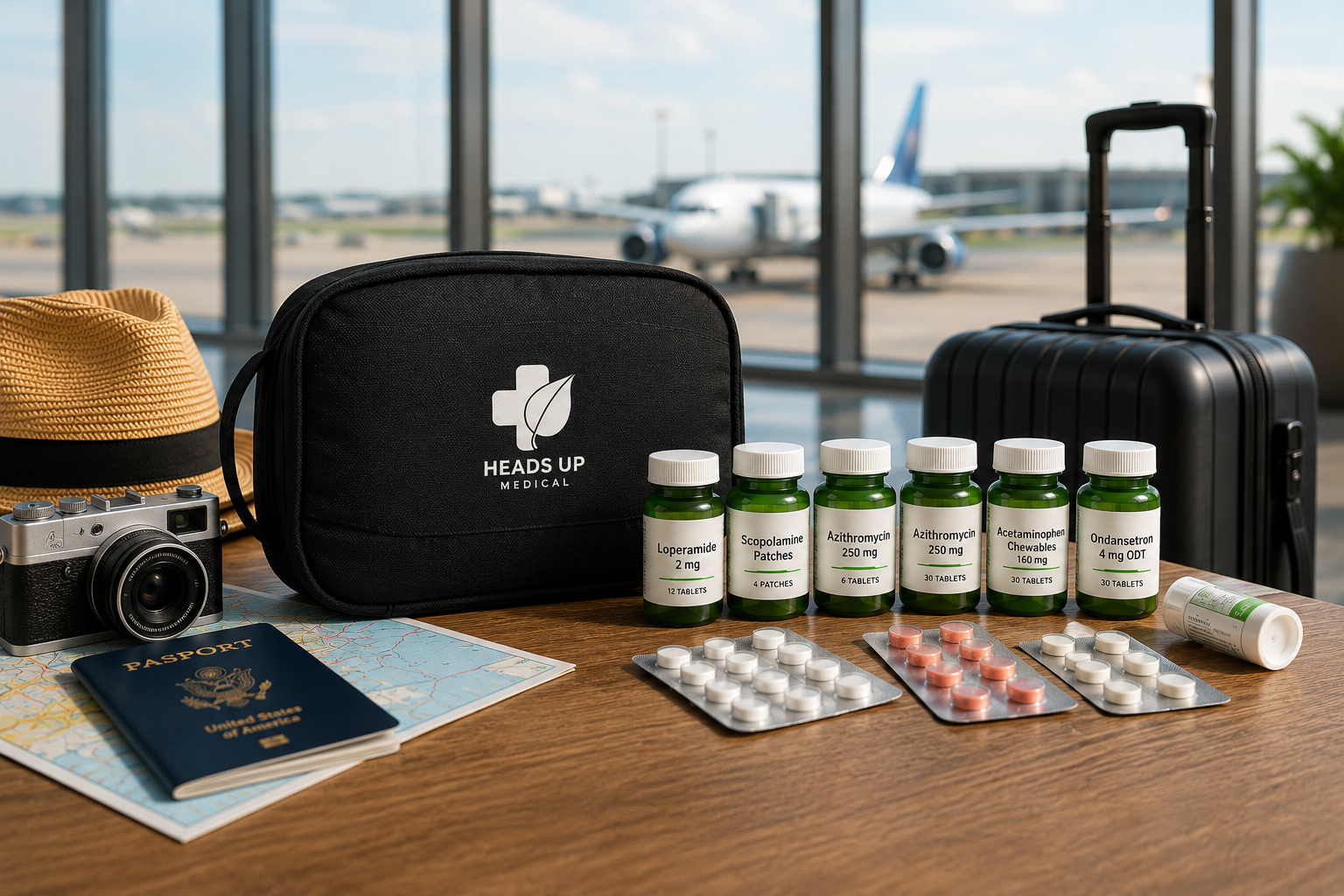
What Medications Should I Pack for International Travel?
Getting sick is inconvenient anywhere. Getting sick thousands of miles from home, where you may not know the healthcare system, pharmacy options or even the local language, can be much more complicated.